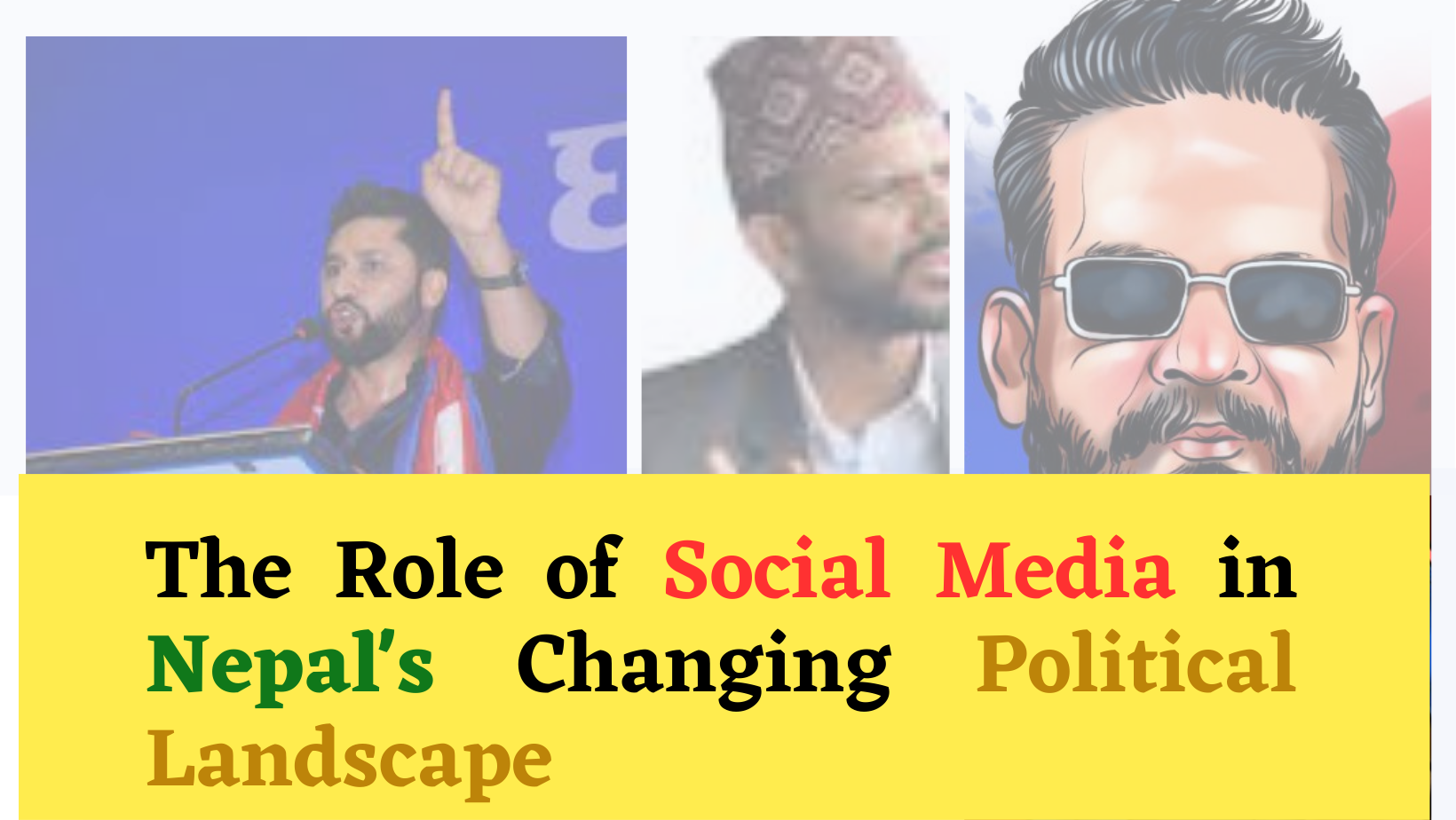
The Role of Social Media in Nepal's Changing Political Landscape
Social media has become an increasingly powerful tool in shaping political discourse around the world, and Nepal is no exception. In recent years, social media platforms like Facebook, Youtube and Twitter have played a significant role in shaping public opinion, mobilizing voters, and holding politicians accountable.
One of the most notable ways in which social media has impacted politics in Nepal is by providing a platform for citizens to voice their opinions and hold their leaders accountable. For many Nepalis, social media is a way to express their frustrations with the country's political system, which has been plagued by corruption and instability. Social media has also been a platform for mobilizing citizens to protest and demand change.
Social media has also played a critical role in Nepal's electoral politics. During the 2022 local elections, political parties used social media to reach out to voters and build their support base. In some cases, political parties even used social media to coordinate their campaign activities and mobilize voters on election day. This has been particularly effective in reaching young voters, who are more likely to use social media than traditional media.
The use of social media in Nepal's political landscape has not been without controversy, however. Social media has been criticized for spreading misinformation and fake news, which can be particularly damaging during elections. There have been instances where political parties and interest groups have used social media to spread false information or rumours about their opponents, which can undermine the credibility of the election process.
Social media has also been a platform for hate speech and online harassment. In Nepal, social media has been used to spread hate speech against marginalized communities, including ethnic minorities, women, and the LGBTQ+ community. Online harassment has also been a growing problem, with women politicians and journalists often being targeted.
Despite these challenges, there is no denying the impact that social media has had on Nepal's political landscape. Social media has given a voice to citizens who may have previously been marginalized or ignored and has provided a platform for political engagement and mobilization. As social media continues to evolve and become more ubiquitous in Nepal, it is likely that its impact on politics will only continue to grow.
In conclusion, social media has played a significant role in shaping Nepal's changing political landscape. It has provided a platform for citizens to voice their opinions, mobilize voters, and hold their leaders accountable. However, social media has also been a source of controversy, with concerns about misinformation, hate speech, and online harassment. As Nepal continues to navigate its political challenges, it is important to recognize the potential of social media to facilitate positive change, while also being mindful of its limitations and potential risks.